
A home cleaning workflow is a planned, repeatable sequence of tasks organized by frequency, room, and order to maintain a clean living space with the least possible time and effort. Most people clean reactively, grabbing a sponge when something looks bad. That approach wastes time, creates rework, and leaves entire areas neglected for weeks. A structured workflow, built on methods like the Clean Mama routine and guidelines from the American Cleaning Institute, changes that entirely. When you layer daily habits with weekly, rotating, and monthly tasks, your home stays consistently clean without any single session feeling overwhelming.
What does a home cleaning workflow actually look like?
A home cleaning workflow divides your total cleaning load into four layers: daily, weekly, rotating, and monthly tasks. Clean Mama’s cleaning schedule is one of the most widely adopted models for this, and it works because it reduces decision fatigue. You never have to ask “what should I clean today?” because the system answers that for you.
Daily tasks are the non-negotiables that take five to ten minutes and prevent buildup. Think wiping counters, doing a quick sweep of the kitchen floor, making beds, and doing one load of laundry. These are not deep cleaning tasks. They are maintenance moves that keep the baseline livable.
Weekly tasks assign one focus area per day so nothing gets skipped. Monday might be bathrooms, Tuesday is vacuuming, Wednesday covers dusting, and so on. Martha Stewart’s cleaning checklists recommend this interval-based approach because it turns housework into autopilot behavior rather than a decision you have to make each time.
Rotating tasks run twice a week and cover chores that do not need daily attention but cannot wait a month. Cleaning the microwave, wiping down cabinet fronts, and scrubbing the shower grout fall here. Monthly tasks go deeper: cleaning behind appliances, washing windows from the inside, and descaling faucets. Writing tasks by frequency rather than just by room creates a measurable, repeatable system that prevents vague or forgotten cleaning.
Pro Tip: Start with daily tasks only for the first two weeks. Add weekly tasks in week three. Layering gradually is how habits form without burnout.
What is the best order to clean each room?
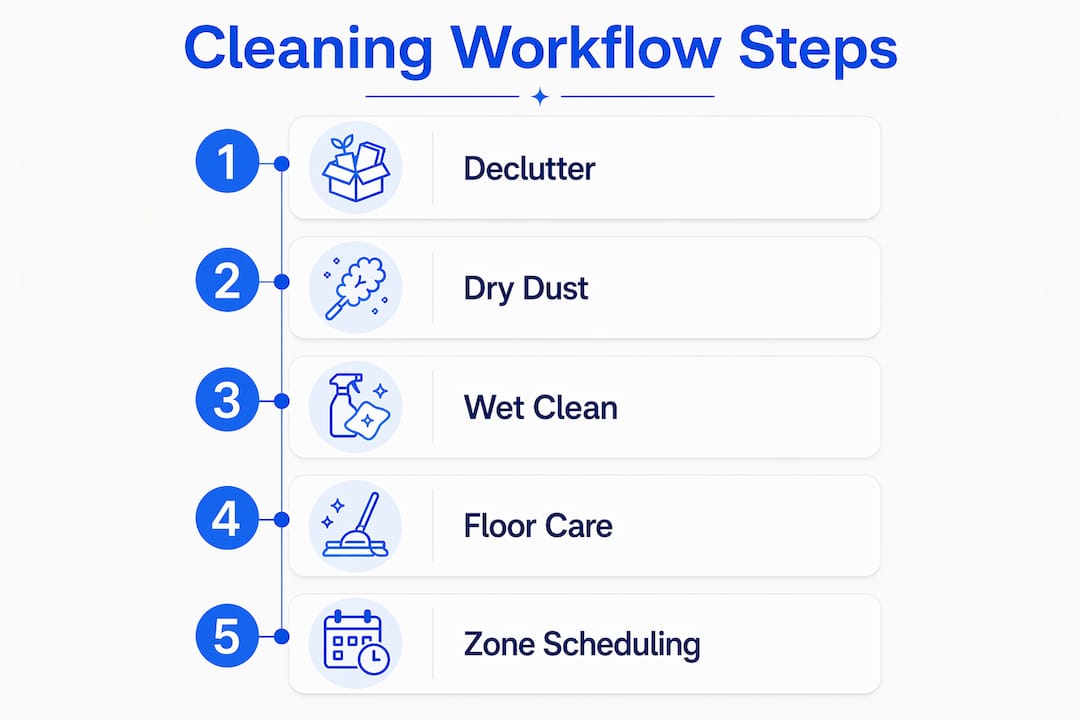
The correct sequence for cleaning any room follows four stages: declutter, dry clean, wet clean, then floors. Skipping or reordering these stages creates rework. If you mop before you dust, falling debris lands on a wet floor. If you spray surfaces before decluttering, you end up moving items through wet cleaner repeatedly.
Here is the expert-recommended sequence:
- Declutter all surfaces first. Remove items that do not belong, put them away, and clear counters and tables. Decluttering before cleaning reduces total cleaning time by 15 to 20 minutes because you stop constantly moving objects around while trying to wipe underneath them.
- Dry dust from top to bottom. Start at ceiling fans and light fixtures, work down to shelves and furniture, and finish at baseboards. The American Cleaning Institute recommends working from the top down and from the farthest corner toward the entrance to avoid re-soiling surfaces you have already cleaned.
- Apply wet cleaners and let them dwell. Spray counters, sinks, and toilets with your chosen cleaner and move on before wiping. This is where most people lose time. Wiping immediately reduces the cleaner’s effectiveness and forces you to scrub harder.
- Clean floors last. Vacuum or sweep before mopping. Start at the farthest corner from the door and work toward the exit so you never walk on a freshly cleaned floor.
Pro Tip: Cleaning in the correct order with dry before wet cuts total cleaning time by up to 30% and completes a 3-bedroom home in 90 to 120 minutes.
| Stage | Task | Time saved |
|---|---|---|
| Declutter first | Clear all surfaces before introducing any cleaner | 15 to 20 minutes |
| Top-down dusting | Dust from ceiling to baseboards before any wet work | Prevents re-soiling |
| Dwell time | Let sprays sit before wiping | Reduces scrubbing effort |
| Floors last | Vacuum then mop, farthest corner to door | Avoids re-dirtying floors |
How does dwell time change your cleaning results?
Dwell time, also called contact time, is the period a disinfectant or cleaner must remain wet on a surface to actually kill bacteria and break down grime. Most people spray and wipe within seconds. That habit makes surfaces look clean while leaving them biologically dirty.
Experts advise letting disinfectants sit for the manufacturer’s recommended contact time, which typically ranges from 30 seconds to four minutes depending on the product. Wiping immediately does not just reduce effectiveness. It means you are essentially rinsing the surface rather than disinfecting it.
The workflow fix is straightforward: spray multiple surfaces sequentially before going back to wipe any of them. Spray the toilet, then the sink, then the counter. By the time you return to the toilet, the dwell time has elapsed and the product has done its job. Staggering tasks during dwell time increases thoroughness without adding a single minute to your total cleaning session.
“Many people waste time by wiping immediately and not utilizing dwell time properly for deeper cleaning.” — Martha Stewart editors, Time-Saving Cleaning Tricks
This single change, shifting from spray-and-wipe to spray-wait-wipe, is one of the most effective time-saving cleaning hacks available. It requires no new products, no extra time, and no special skill. It just requires changing the order of your actions.
- Spray all bathroom surfaces before wiping any of them
- Apply oven cleaner and clean another room while it works
- Soak faucets in descaler while vacuuming the bedroom
- Let toilet bowl cleaner sit while you wipe the mirror and counter
How does zone cleaning simplify your house cleaning routine?
Zone cleaning divides your home into defined clusters of rooms or areas, then assigns each zone its own cleaning schedule. Rather than trying to clean the entire house in one session or bouncing randomly between rooms, you focus all effort on one zone per session. A 2026 guide on zone cleaning recommends mapping your home into five zones with an optional flex zone for customizing schedules per area.
A typical five-zone setup looks like this:
- Zone 1: Kitchen and dining area
- Zone 2: Living room and entryway
- Zone 3: Primary bedroom and closet
- Zone 4: Secondary bedrooms and hallways
- Zone 5: All bathrooms
Each zone gets a dedicated day or session in your weekly schedule. This prevents the scattered effort of half-cleaning multiple rooms and leaving none of them fully done. It also makes delegation easier. If you share your home with a partner or roommate, assigning zones removes ambiguity about who cleans what.
| Cleaning approach | Effort distribution | Risk of incomplete cleaning |
|---|---|---|
| Room-by-room random | Scattered, inconsistent | High |
| Whole-house in one session | Exhausting, unsustainable | Medium |
| Zone cleaning | Focused, manageable | Low |
Zone cleaning also pairs well with a cleaning task checklist because each zone has its own defined list of tasks. You check off what is done, see exactly what remains, and never wonder whether you forgot the guest bathroom. For renters managing smaller spaces, two or three zones often cover everything without overcomplicating the system.
Pro Tip: Map your home on paper before assigning zones. Draw a simple floor plan and circle rooms that share traffic patterns. Those clusters become your natural zones.
Key takeaways
A sustainable home cleaning workflow combines layered task scheduling, expert-recommended room sequencing, dwell time discipline, and zone-based organization to reduce total cleaning time and maintain consistent results.
| Point | Details |
|---|---|
| Layer tasks by frequency | Separate daily, weekly, rotating, and monthly tasks to prevent overwhelm and build habits. |
| Clean in the right order | Declutter, then dry dust, then wet clean, then floors to avoid rework and save up to 30% of cleaning time. |
| Use dwell time actively | Spray multiple surfaces before wiping any to let cleaners work and reduce scrubbing effort. |
| Adopt zone cleaning | Divide your home into 5 zones and focus one session per zone to reduce scattered effort. |
| Start small and layer | Build daily habits first, then add weekly tasks, to form routines that stick without burnout. |
Why most cleaning advice misses the point
I have seen a lot of cleaning content that leads with product recommendations or elaborate checklists. In my experience, neither of those things is where people actually struggle. The real problem is sequence and habit, not supplies.
The single most common mistake I observe is skipping the declutter stage. People walk into a room, grab a spray bottle, and start wiping around objects. That adds 15 to 20 minutes of wasted motion to every session. The second most common mistake is rushing dwell time. Spray-and-wipe feels productive, but it is mostly theater. You are moving dirt around, not eliminating it.
What actually works is starting embarrassingly small. Pick one daily task and do it for two weeks straight. Making your bed every morning or wiping the kitchen counter after dinner sounds trivial, but those habits create the mental scaffolding for a full workflow. Once those feel automatic, adding a weekly zone focus becomes natural rather than forced.
I also think people underestimate how much a written checklist changes behavior. It is not about being rigid. It is about removing the mental load of deciding what to do next. A structured cleaning approach is the biggest time saver available because it eliminates haphazard effort and re-cleaning. When your workflow is written down and sequenced correctly, cleaning becomes a background function of your week rather than a dreaded event.
— nolan
How Broswindowcleaningoc supports your full cleaning plan

A strong interior workflow handles the surfaces you touch every day. But windows, gutters, and exterior surfaces need professional attention that no weekly routine can cover. Broswindowcleaningoc serves homeowners and renters across Orange County, CA with window cleaning services that remove water stains, grime, and buildup that standard household tools cannot reach. Their team also handles pressure washing for exteriors and gutter cleaning to protect your property from debris and water damage. Scheduling a professional exterior session two to four times per year complements your interior routine and keeps the full property in top condition.
FAQ
What is a home cleaning workflow?
A home cleaning workflow is a planned, repeatable sequence of cleaning tasks organized by frequency and room order to maintain a clean home with minimal wasted effort. It typically layers daily, weekly, rotating, and monthly tasks.
How long does it take to clean a 3-bedroom home with a proper workflow?
Following the correct sequence of decluttering, dry dusting, wet cleaning, and floor care, a 3-bedroom home takes 90 to 120 minutes. Cleaning in the right order reduces total time by up to 30% compared to random cleaning.
What is dwell time and why does it matter?
Dwell time is the period a disinfectant must remain wet on a surface to kill bacteria effectively. Wiping too soon reduces the product’s effectiveness and leaves surfaces appearing clean but not actually disinfected.
What is zone cleaning and how does it work?
Zone cleaning groups your home into defined clusters of rooms, typically five zones, and assigns each zone a dedicated cleaning session. This reduces scattered effort, makes tracking easier, and prevents any area from being consistently skipped.
How do I build a cleaning routine that I will actually stick to?
Start with one or two daily tasks and repeat them for two weeks before adding weekly tasks. The Clean Mama method recommends layering gradually to build habits without overwhelming yourself from the start.
Pingback: Match Soil, Save Energy: Dishwasher Cycles Explained for Homeowners