
Pressure washing looks easy until the moment it isn’t. A split second at the wrong angle, the wrong nozzle, or the wrong surface and you’re looking at cracked wood, gouged stucco, or worse, a trip to the ER. In Orange County, where coastal humidity pushes mildew growth year-round, the temptation to grab a pressure washer and go hard is real. But ~6,000 ER visits yearly are tied to pressure washer misuse. The good news: nearly every one of those accidents is avoidable. This guide walks you through exactly how to pressure wash your home or business exterior safely, step by step.
Table of Contents
- Personal safety: The essential gear and precautions
- Set up smart: Preparing your equipment and work area
- Safe washing technique: Step-by-step for best results
- Aftercare and troubleshooting: What to check and fix post-wash
- The truth about safe DIY vs. hiring pros: Our view for Orange County homes
- Safer, more effective cleaning starts here
- Frequently asked questions
Key Takeaways
| Point | Details |
|---|---|
| Wear proper safety gear | Always use goggles, gloves, boots, and hearing protection to prevent common injuries. |
| Prep before you wash | Inspect equipment and cover windows, plants, and power sources to avoid damage or hazards. |
| Use the right technique | Wash with a downward angle from top to bottom, keeping a safe distance and steady movement. |
| Check results and maintain | Review your work, troubleshoot issues, and schedule regular cleaning for best exterior health. |
Personal safety: The essential gear and precautions
With the risks top of mind, let’s start by getting you suited up for safety. Most people skip the protective gear because pressure washing feels like a simple outdoor chore. It isn’t. The spray from a pressure washer can exceed 2,000 PSI and is powerful enough to puncture skin before you even feel it happening.
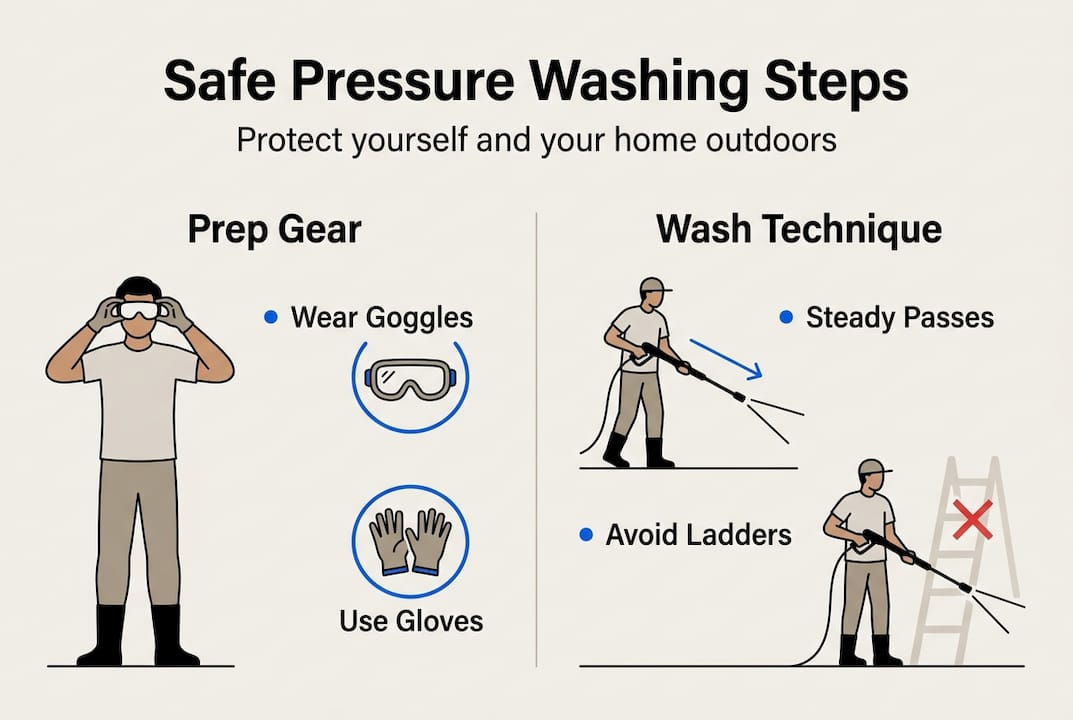
Appropriate PPE is not optional. It includes safety goggles, waterproof gloves, hearing protection, non-slip boots, and waterproof clothing. Each item serves a specific purpose. Goggles shield your eyes from debris and chemical splash. Non-slip boots protect you on wet concrete or tile, where falls are the most common accident type. Hearing protection matters because gas-powered pressure washers routinely hit 85 to 100 decibels, equivalent to standing next to a running lawnmower for an extended session.
Understanding the importance of PPE for cleaning tasks like this one can genuinely be the difference between a productive Saturday and a painful injury. Don’t treat it as optional.
Safety fact: Pressure washers send ~6,000 people to emergency rooms every year. High-pressure streams can puncture skin on contact, and slip-and-fall injuries on wet surfaces are among the most frequent incidents reported.
Required PPE checklist:
- Safety goggles or a full face shield
- Waterproof, cut-resistant gloves
- Hearing protection (earplugs or earmuffs)
- Non-slip, waterproof boots
- Waterproof pants and jacket or coveralls
Before you start, inspect your gear and your equipment. Look for cracks in hose fittings, fraying on the high-pressure hose, and any signs of water leakage around the gun handle. A leaking hose under pressure is a whip hazard.
| PPE Item | Risk It Prevents | Minimum Standard |
|---|---|---|
| Safety goggles | Eye injury from debris/chemical | ANSI Z87.1 rated |
| Non-slip boots | Slip-and-fall on wet surfaces | Steel toe preferred |
| Hearing protection | Hearing damage from engine noise | NRR 25+ rating |
| Waterproof gloves | Skin lacerations, chemical exposure | Nitrile or rubber |
Pro Tip: Wear brightly colored clothing when working in shaded areas or near driveways. It keeps you visible to anyone who might pull in or walk through while the washer is running.
Set up smart: Preparing your equipment and work area
Once you’re wearing the right gear, it’s time to get your workspace and tools ready for safe, effective cleaning. Setup mistakes cause a surprising number of pressure washing accidents and most happen before the water even turns on.
Start with a thorough equipment inspection. Read the manufacturer’s manual, check every fitting for damage or wear, and confirm the inlet screen is clear of debris. For electric models, always use a GFCI (Ground Fault Circuit Interrupter) outlet. This is a standard outdoor outlet that cuts power instantly if it detects a fault. Running an electric pressure washer from an indoor extension cord is a common and dangerous shortcut.
Next, clear and prepare your work area. Cover plants, electrical fixtures, and windows with tarps or plastic sheeting, and close all windows and doors before you begin. Water forced into gaps around windows or behind siding can cause mold damage that costs far more to fix than the cleaning saved.
For a solid introduction to the basics, reviewing pressure washing basics before your first session is time well spent.
Electric vs. gas pressure washers: Which is safer for your job?
| Feature | Electric | Gas |
|---|---|---|
| PSI range | 1,200 to 2,000 | 2,000 to 4,000+ |
| Best use | Home surfaces, cars, patios | Driveways, commercial, heavy buildup |
| Safety ease | Easier to control | Requires more experience |
| Emission risk | None | Carbon monoxide in enclosed areas |
| Startup | Simple plug-in | Fuel/choke management |
Workspace hazards to check before starting:
- Children and pets in the area
- Overhead power lines within spray reach
- Outdoor furniture, potted plants, and valuables near walls
- Slippery surfaces like wet tile or painted concrete
- Open electrical outlets or exposed wiring
Step-by-step workspace setup:
- Move or cover all outdoor furniture and valuables
- Cover plants and garden beds with plastic sheeting
- Tape plastic over electrical outlets and light fixtures
- Close all windows and doors
- Connect equipment and test for leaks before raising pressure
- Spray a small inconspicuous patch to confirm settings
Pro Tip: Only use extension cords rated for outdoor, heavy-duty use with electric models. Undersized cords overheat, which can trip breakers or cause fires under sustained load.
Safe washing technique: Step-by-step for best results
Now that your equipment and prep are dialed in, here’s how to perform the cleaning safely and effectively. Technique is where most DIY jobs go wrong, even when the prep was perfect.
Always work top-to-bottom using a downward angle. Spraying upward pushes water behind siding or into window frames, which invites mold and rot. Start at a comfortable distance from the surface, typically 18 to 24 inches, and move closer only if needed.
Step-by-step washing process:
- Start the washer with the trigger engaged slightly to release pressure before going full force
- Select the right nozzle: 25° (green) for most home surfaces, 40° (white) for softer materials
- Hold the wand with both hands and maintain a firm, steady grip
- Work in smooth, overlapping horizontal passes from top to bottom
- Keep the nozzle moving; never hold it still on one spot
- Shut off the trigger when moving between sections
- After finishing, release pressure from the hose before disconnecting
Critical warning: Never use a 0° nozzle on any home surface. It concentrates pressure into a pinpoint stream powerful enough to strip paint, gouge wood, and cut through caulking in seconds. Avoid using a ladder while operating the wand; the kickback can throw you off balance.
Common mistakes to avoid:
- Spraying upward at window frames or siding gaps
- Using harsh chemicals not rated for the surface being cleaned
- Skipping the test patch on new or delicate surfaces
- Standing directly below a surface you’re washing
- Using the 0° red nozzle for any standard exterior cleaning
For gutter and siding cleaning safety, following proper angle and pressure guidelines is especially important because these surfaces are more vulnerable to water intrusion than they appear. If your property also has glass you need to protect, check out these cleaning window tips to avoid accidental damage.
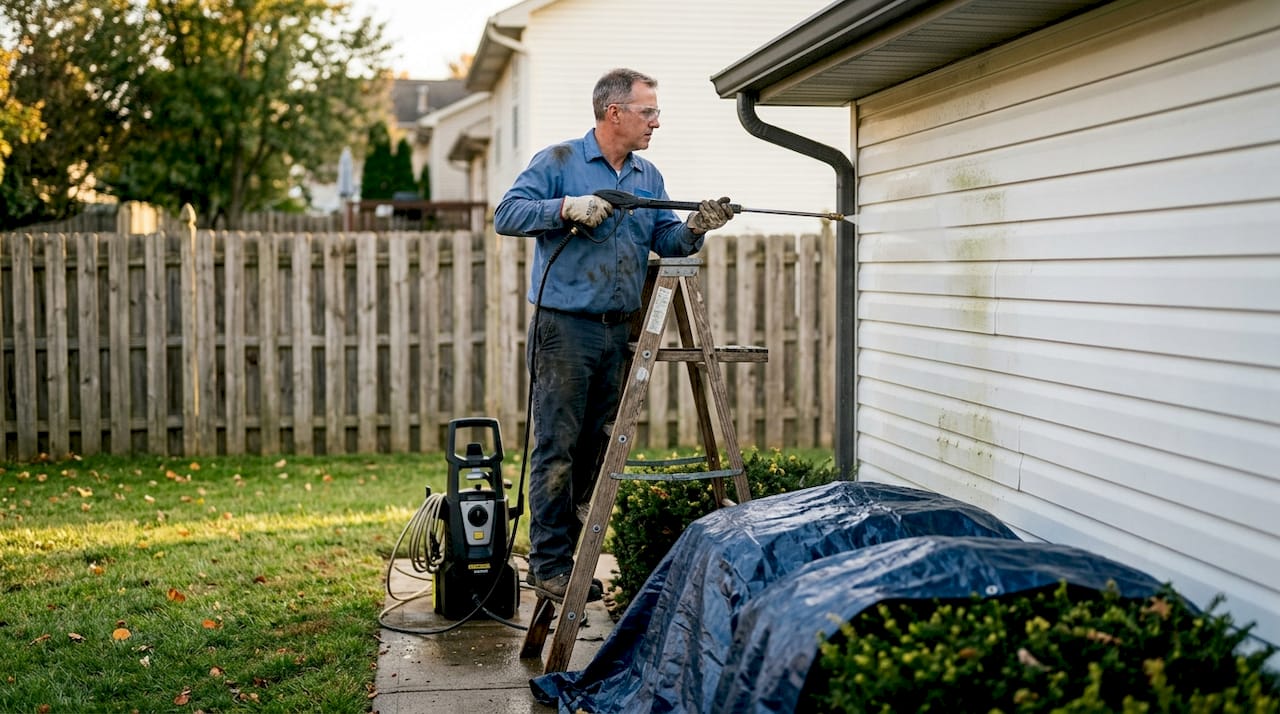
Pro Tip: Move steadily and keep consistent overlap between passes. Stopping or pausing on one spot creates visible streaks and can etch softer surfaces like wood or painted stucco.
Aftercare and troubleshooting: What to check and fix post-wash
Finishing safely matters as much as starting strong. Here’s what to watch for as you wrap up.
After you power down, turn off the machine properly by releasing pressure through the wand before disconnecting any hoses. Never yank a pressurized hose or it can kick back hard. Drain the system if temperatures will drop below freezing, a real concern in inland Orange County during winter months.
Walk the entire surface you just cleaned and look for these issues:
- Streaking or uneven color, which signals inconsistent distance or technique
- Areas where paint has lifted or stucco looks pitted
- Any spots around window frames or doors where water may have entered
- Remaining mold or dark stains that need a second pass with a lower pressure setting
Common post-wash problems and safe fixes:
| Problem | Likely Cause | Safe Fix |
|---|---|---|
| Streaks on siding | Stopped mid-pass | Re-wash with steady horizontal passes |
| Paint peeling | PSI too high | Lower pressure; consult a painter |
| Mold still visible | Pressure alone not enough | Use approved detergent; consider softwash |
| Water near windows | Wrong spray angle | Seal gaps; monitor for interior moisture |
| Surface pitting | 0° nozzle or too close | Sand and repaint affected area |
Annual cleaning prevents mold and long-term surface damage. In Orange County, coastal humidity makes spring and fall the ideal windows for exterior cleaning, and 1 to 2 times per year is the right cadence to stay ahead of buildup.
If you notice persistent dark growth, lifting paint, or water damage after cleaning, that’s a signal to call in a professional. For properties with solar panels, following proper solar panel care tips after any exterior wash helps protect your investment. And if you’re dealing with recurring exterior problems, professional cleaning for troubleshooting can save you from costly repairs down the line.
Pro Tip: Schedule biannual cleanings in spring and fall to stay ahead of Orange County’s coastal mildew. Letting it go 18 months or more means dealing with staining that requires much more pressure and chemical treatment to remove.
The truth about safe DIY vs. hiring pros: Our view for Orange County homes
With the basics and best practices covered, it’s worth asking when you should DIY and when the smart, safe move is to get help.
Honestly, DIY is reasonable for light residential single-story homes when you prepare properly. If your home is one story, you have a flat driveway or patio, and the grime is recent, a quality electric pressure washer and the steps above will serve you well.
But here’s what most homeowners overlook. Multi-story work is genuinely dangerous without professional equipment and training. Using a ladder while holding a high-pressure wand is one of the most common causes of serious injury in this category. For businesses, apartment complexes, or historic properties, the risks multiply fast.
There’s also the regulatory side. Orange County has specific rules about where wash water can run off and what chemicals are allowed near storm drains. Professionals who specialize in commercial pressure washing expertise understand those rules and carry the right insurance if something goes wrong. DIY mistakes on commercial properties can result in city fines or liability claims that dwarf the cost of hiring help. The window cleaning impact on property value is real too, and combining services with a professional visit often delivers better overall results.
Pro Tip: Before any DIY pressure washing, check Orange County’s municipal code on surface water runoff and approved cleaning chemicals. Violations can trigger fines even on residential properties.
Safer, more effective cleaning starts here
If you’re ready to enjoy all the benefits of safe, effective exterior cleaning, or simply want help with the toughest jobs, here’s where to start.
For complex, multi-story, or high-risk exteriors, having a fully insured local team makes a real difference. Bros Window Cleaning has served Orange County homeowners and businesses for over five years, handling everything from pressure washing basics to advanced commercial jobs with the care and compliance your property deserves.

Beyond pressure washing, our team covers window cleaning, gutter cleaning, solar panel cleaning, and more, all in a single visit if needed. Whether you want to handle the easy stuff yourself and hand off the risky work, or you’d rather have the whole job done right from the start, we’re ready. Explore the full range of commercial pressure washing benefits or check out our complete lineup of window cleaning services to get started.
Frequently asked questions
What PSI is safe for pressure washing a house exterior?
Most home exteriors clean well at 1,500 to 2,500 PSI. Always avoid 0° nozzles and test on a small hidden area before working on the full surface.
How often should I pressure wash my property in Orange County?
Clean your property 1 to 2 times per year, ideally in spring and fall. Annual cleaning prevents mold and surface damage, especially in coastal Orange County’s humid climate.
What are the most common pressure washing injuries?
The most common injuries include skin punctures from high-pressure streams, eye injuries from debris, and slip-and-fall accidents on wet surfaces. ~6,000 ER visits yearly are linked to pressure washer misuse.
Do I need to cover windows and plants before pressure washing?
Yes. Always cover plants, windows, and electrical fixtures with tarps or plastic before starting. Close all windows and doors to prevent water from forcing into gaps.
Is it better to hire professionals for pressure washing large buildings?
Yes. For multi-story buildings or commercial exteriors, pros are recommended due to safety risks, equipment requirements, and California regulatory compliance.
Pingback: Essential Reasons to Pressure Wash Your Property for Lasting Value
Pingback: Why Hire Certified Cleaning Professionals for Your Home
Pingback: What Is Soft Wash Cleaning? A Homeowner's Guide
“Every single point you made is dead on. Nothing to add, just nodding along the whole time”
Pingback: 8 Common Exterior Cleaning Mistakes That Damage Your Home
Pingback: Stop Shingle Loss: Roof Cleaning Methods for Homeowners Under 600 PSI
Pingback: Clean Retaining Walls Without Damaging Mortar or Drains for Homeowners